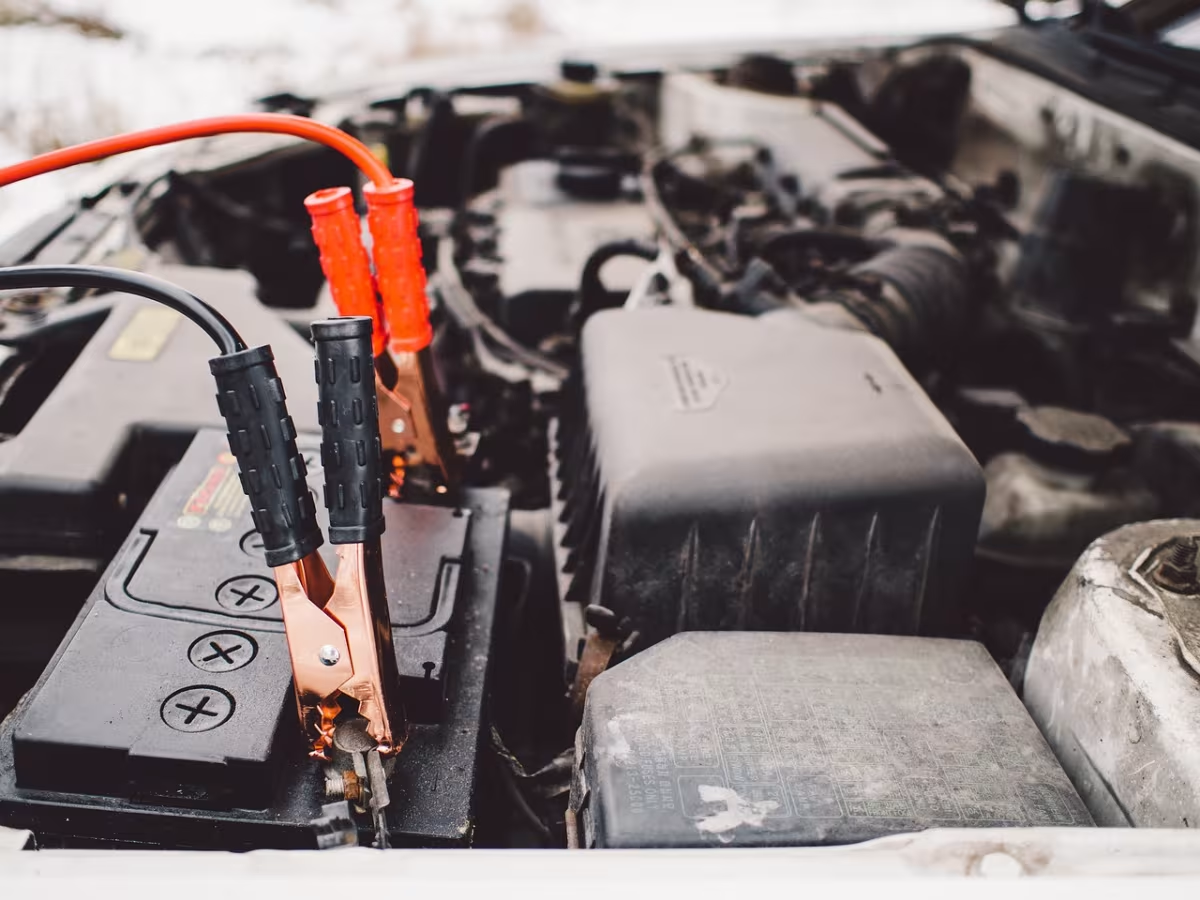
How to jump start a car, step by step
Connect the clamps in the wrong order and you can spark next to a battery venting hydrogen, or push voltage the wrong way through the electronics. Work through it here first — it takes a minute and it is the part people get wrong.
Before you touch anything
Why the last clamp goes on bare metal
If you remember one thing from this page, make it this. Almost everyone knows red to red. Far fewer know that the second black clamp does not go on the flat battery’s negative terminal — and it is the step with the real consequence.
A lead-acid battery gives off hydrogen, and a discharged one being charged gives off more. Hydrogen is explosive in air across a wide range of concentrations. Completing a circuit always produces a small spark. Put those two facts together and the reason becomes obvious: you want that final spark as far from the battery as the leads allow.
A solid, unpainted piece of metal on the engine block does the job. Keep it away from the battery, the fuel system and anything that moves when the engine fires — belts and fans in particular.
When not to attempt it at all
There is no shame in deciding this is not a job for the roadside. These are the situations where we would tell you to leave it:
- The battery is cracked, leaking, swollen or heavily corroded. Do not connect anything to it.
- You cannot confidently identify which terminal is which. Reversed polarity is an expensive mistake, and covers and corrosion can make it genuinely unclear.
- The only donor available is a hybrid or an electric car. Never use one as the donor.
- There is any orange cabling in the engine bay. Orange means high voltage. Nothing there is roadside work.
- You are on a live carriageway. Get yourself clear and call — see what to do if you break down on the A55.
- It has not started after a few attempts. Repeated cranking flattens what charge is left and overheats the starter. Something else is wrong.
On hybrids you can normally boost the 12 volt battery, but check the handbook first — the terminals are often not where you expect. Our electric car breakdown guide explains the difference between the two batteries in an EV.
It started. Now what?
A jump start gets the engine running. It does not recharge the battery, and that distinction matters.
- Drive for at least 30 minutes in normal conditions rather than stop-start traffic.
- A mains charger overnight is far better. An alternator recharges a deeply flat battery slowly, and half an hour of driving will not restore one properly.
- If it will not start next morning, the battery is no longer holding charge, or something is draining it while parked.
- If it died again shortly after the leads came off, that is the alternator, not the battery — see jump started but the car died again.
- Not sure it was ever the battery? Our battery health check scores how close yours is to failing, and battery, alternator or starter tells the three apart.
One more thing worth knowing: the RAC does not recommend bump or push starting, and neither do we. On a modern car it risks the catalytic converter and the transmission, and it is not possible at all on an automatic.
We come to you, 24/7 across North Wales
No leads, no second car, or simply not confident — that is a perfectly good reason to call. Our mobile jump start service aims to reach you within 30 to 60 minutes, and we confirm the price before we set off. We will also tell you honestly if a jump start will not fix it.
Call 07768 491888More guides and tools
Questions, answered
What order do you connect jump leads?
Red to the positive terminal of the flat battery, red to the positive terminal of the donor battery, black to the negative terminal of the donor battery, then the last black clamp to bare unpainted metal on the flat car, away from the battery. Disconnect in exactly the reverse order.
Why does the last black clamp go on bare metal instead of the battery?
Because completing the circuit produces a spark, and a discharged battery gives off hydrogen, which is explosive. Earthing the final connection to the engine block puts that spark well away from the gas. It is the step people most often get wrong.
What happens if you connect jump leads the wrong way round?
Reversed polarity sends current the wrong way through the electrical system. It can blow fuses, destroy the alternator and damage the engine ECU, which is a far more expensive repair than the flat battery you started with.
Can you use an electric or hybrid car to jump start another car?
No. Never use a hybrid or electric vehicle as the donor. Their 12 volt systems are not designed to deliver that kind of current and you risk damaging the donor car's electronics. You can usually boost the 12 volt battery of a hybrid, but check the handbook first.
How long should you leave a car running after a jump start?
Let the donor run for around five minutes before trying the flat car, and once yours is running, drive for at least 30 minutes in normal conditions rather than stop-start traffic. Better still, put it on a proper mains charger overnight, since an alternator recharges a deeply flat battery slowly.
Can you disconnect jump leads with the engine running?
Switch both engines off first, then disconnect in reverse order, then restart. Guidance is inconsistent on this point, so we follow the safer reading: with the engines off there is no risk of a spark or voltage spike as the clamps come away.
How long can you crank the engine for?
No more than about five seconds at a time, with a pause between attempts. Longer overheats the starter motor and drains what charge you have just put in. If it has not started after a few attempts, something other than a flat battery is wrong.
Is bump starting a car safe?
The RAC does not recommend it, and neither do we. On a modern car it risks damaging the catalytic converter and the transmission, and it is not possible on an automatic. Use jump leads or a booster pack instead.