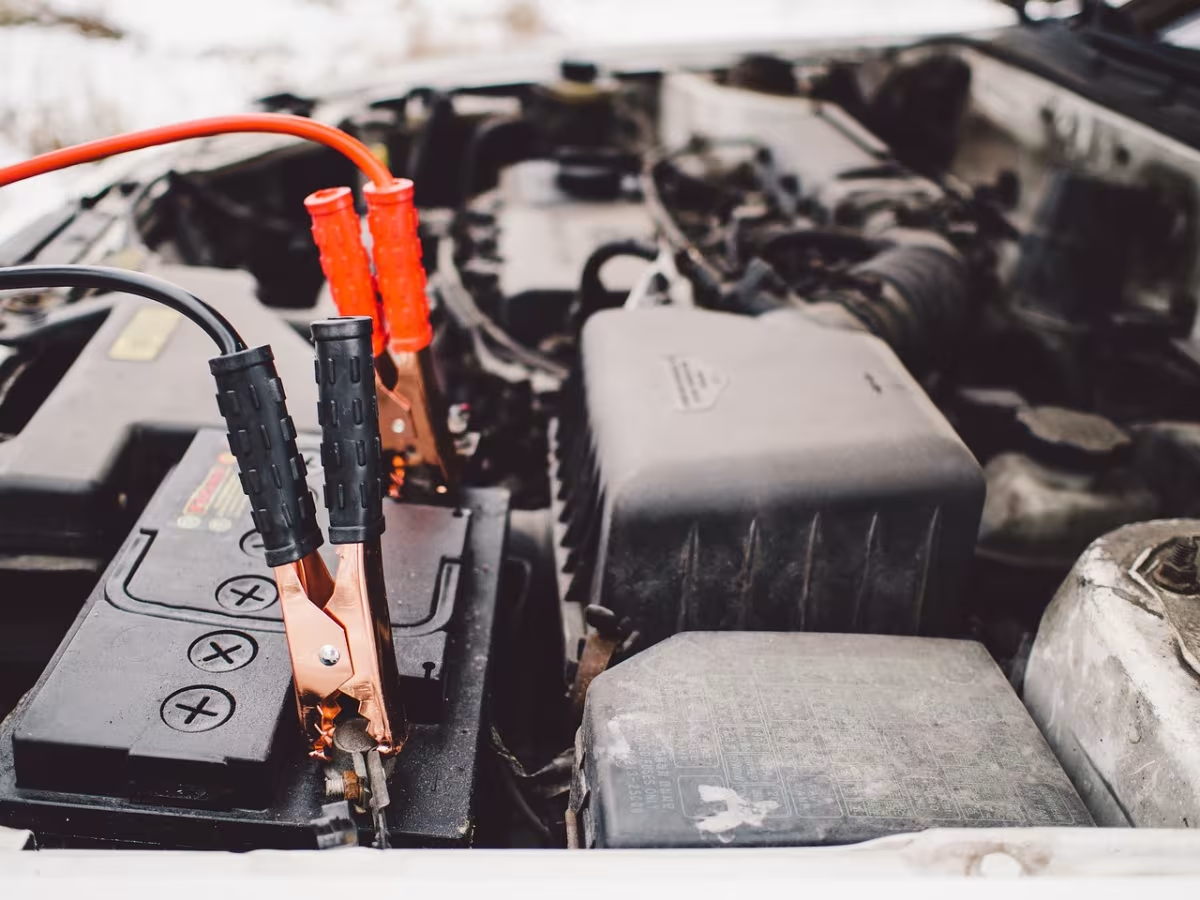
Car battery health check
Five questions to estimate how close your battery is to letting you down — and which factor is doing the most damage. Most batteries give warning before they fail. This is what that warning looks like.
Three to five years, then quickly
A car battery does not fade evenly. It holds up well for years, then loses capacity fast at the end, which is why failure usually feels sudden even though the decline was gradual.
Typical life is three to five years, and less if the car mostly does short journeys. Starting an engine takes a large amount of charge, and a ten-minute drive may not put it back. Do that daily and the battery sits permanently short of full, which accelerates the ageing.
Being run completely flat causes permanent damage as well. A battery that has been fully flattened two or three times — lights left on, a door not shut properly overnight — often never recovers its original capacity, even after a full recharge.
Why it always happens on the first frost
Cold attacks the battery from both directions at once. It slows the chemical reaction inside, so the battery can deliver less current, and it thickens the engine oil, so the starter needs more current to turn the engine over.
A battery that was quietly failing all summer will often fail outright on the first properly cold morning. That is why call volumes for jump starts across North Wales spike after the first hard frost, and why a slightly slow crank in October is worth acting on rather than ignoring.
What a voltmeter will tell you
A cheap multimeter settles most of this in two minutes. Set it to DC volts, red probe to positive, black to negative.
- Around 12.6 V with the engine off and the car stood for a few hours is a healthy, fully charged battery.
- Around 12.4 V is partly discharged — it may start the car in mild weather and fail on a cold morning.
- Below about 12.0 V is significantly discharged and unlikely to start the engine.
- 13.7 V to 14.7 V with the engine running means the alternator is charging correctly.
- Still around 12 V with the engine running means it is not charging at all, and the car is running on the battery.
If the symptoms point at charging rather than the battery itself, our guide to telling the battery, alternator and starter apart walks through it, and jump started but the car died again covers what it means when a boost does not hold.
Mobile jump starts across North Wales, day and night
We aim to reach you within 30 to 60 minutes and confirm the exact price before we set off. We will also tell you straight if a jump start will not fix it — see the jump start service.
Call 07768 491888More guides and tools
Questions, answered
How long should a car battery last?
Typically three to five years, and less if the car mainly does short journeys. Batteries hold up well for years then lose capacity quickly at the end, which is why failure feels sudden. Being run completely flat causes permanent damage and shortens life further.
What are the signs a car battery is failing?
Cranking that sounds slower than usual, especially on cold mornings; headlights that dim while starting; needing a jump start more than once; and electrical oddities at idle. A battery warning light that stays on while the engine runs points at charging rather than the battery itself.
Why does my car only struggle to start when it's cold?
Cold slows the chemical reaction inside the battery so it delivers less current, and it thickens engine oil so the starter needs more. A battery that is already weak will cope in mild weather and fail on the first hard frost.
What voltage should a car battery be?
About 12.6 V with the engine off after standing a few hours indicates a healthy, fully charged battery. Around 12.4 V is partly discharged. With the engine running you should see 13.7 V to 14.7 V, which shows the alternator is charging.
Do short journeys damage a car battery?
They shorten its life. Starting the engine uses a large amount of charge and a short drive may not replace it, so the battery sits permanently below full. Over months that accelerates ageing, which is why cars used only for short hops tend to need batteries sooner.
Will a long drive fix a weak battery?
It helps but rarely fixes it. An alternator recharges a deeply discharged battery slowly, so half an hour of driving will not fully restore one. An overnight charge from a mains charger does a much better job, though a battery that has been flattened repeatedly may not recover at all.