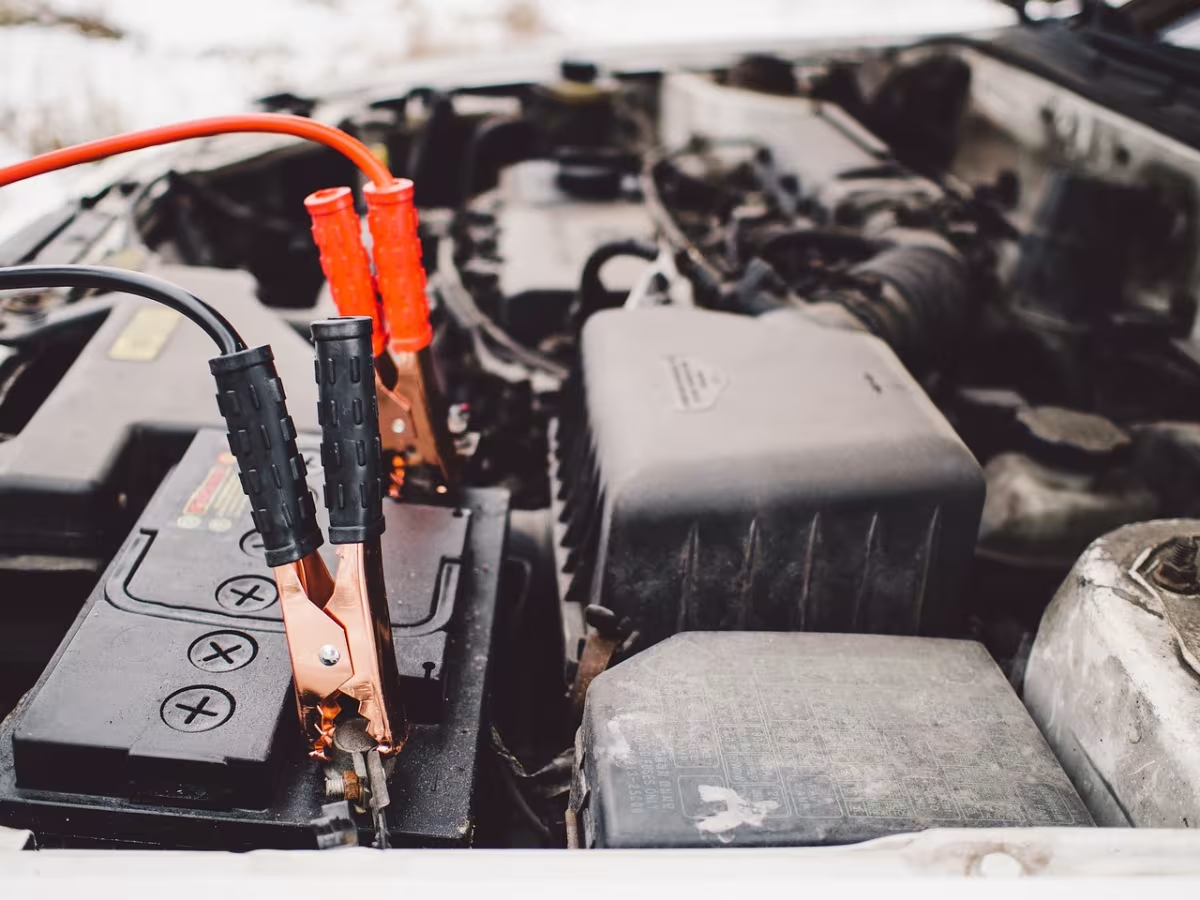
Car won’t start? How to tell if it’s the battery, the alternator or the starter
Three different faults produce three different sounds. Once you know what you are listening for, you can usually work out which one you have in about ten seconds — before anyone opens the bonnet.
The thirty-second version
Turn the key or press the button, and listen carefully. The noise your car makes is the single most useful diagnostic you have.
- Rapid clicking, like a playing card in bicycle spokes — almost always a flat or dying battery. There is enough power to pull in the starter solenoid but not enough to turn the engine, so it chatters.
- One loud, single click and then nothing — the battery is probably fine. Suspect the starter motor or its solenoid.
- Slow, laboured cranking that gets slower — a weak battery, or a healthy battery that an alternator has stopped charging.
- Complete silence, no dash lights — a completely flat battery, a loose or corroded terminal, or an earth fault.
- Silence but the dash lights up normally — less likely to be the battery. Think immobiliser, key fob, or a safety switch.
- Cranks strongly but never fires — the starting system is doing its job. The problem is fuel, spark or a sensor.
The rest of this guide explains why each of those happens, what you can check safely at the roadside, and which faults a jump start will actually fix.
When it is the battery
The battery has one job at the moment you turn the key: deliver a very large current, very briefly, to spin the engine. A starter motor can draw several hundred amps in that first second. A battery that runs your radio and lights perfectly happily can still be nowhere near strong enough to do that.
That is why a car can have bright dashboard lights and still refuse to turn over. People often rule the battery out on exactly that evidence, and it is the most common wrong turn in roadside diagnosis.
Signs pointing at the battery
- Rapid clicking when you turn the key
- Cranking that sounds slower than usual, especially on the first attempt of the day
- Headlights that visibly dim as you crank
- It started fine yesterday, and the weather has turned cold
- The car has been standing unused for two weeks or more
- Something was left on overnight — interior light, boot light, headlights, a door not shut properly
- The battery is more than five years old
Why cold weather exposes a weak battery
Cold does two things at once, and they work against each other. It slows the chemical reaction inside the battery, so it can deliver less current. At the same time it thickens the engine oil, so the starter needs more current to turn the engine over. A battery that was quietly failing through the summer will often fail outright on the first properly cold morning — which is why we take a noticeable spike in jump start calls across North Wales after the first hard frost.
When it is the alternator
The alternator recharges the battery and runs the car’s electrics once the engine is running. When it fails, the car keeps going on battery power alone until the battery is flat — then everything stops.
This is the fault most often mistaken for a battery problem, because the end result looks identical: a flat battery. The difference is that replacing the battery will not fix it. The new battery will simply go flat too.
Signs pointing at the alternator
- The battery warning light stays on while the engine is running — this light means charging, not battery condition
- Headlights that dim at idle and brighten when you rev
- The car died while you were driving, rather than failing to start
- A jump start works, but the car dies again shortly afterwards
- A whining or grinding noise from the engine bay
- A smell of hot rubber, from a slipping drive belt
- Dashboard warnings appearing in odd combinations as voltage drops
If your car was jump started and then failed again, that pattern is specific enough to be worth its own guide — see jump started but the car died again.
When it is the starter motor
The starter is an electric motor that physically spins the engine. When it fails, the battery is usually in perfectly good health — which is the clue.
Signs pointing at the starter
- A single loud click, then silence, with lights that stay bright
- Dashboard and headlights at full strength, but nothing turns over
- A grinding noise as it engages
- It works intermittently — fails once, then starts on the third attempt
- A whirring with no engine movement, meaning the motor spins but does not engage
Intermittent starting that eventually works is a classic sign of worn contacts inside the solenoid. It will get worse, and it tends to strand people somewhere inconvenient rather than at home.
A jump start will not fix a failed starter. If a booster pack makes no difference at all and your lights are strong, the starter is the more likely culprit and the car will need recovery rather than a boost.
Other things that stop a car starting
- A flat key fob battery. Many cars will not authorise a start if they cannot see the key. Most have a backup — a hidden slot, or holding the fob against the start button. Your handbook will say.
- The immobiliser. A security light flashing rapidly instead of going out usually means the car does not recognise the key.
- Not fully in park or neutral. Automatics often will not crank unless the selector is properly in P or N; try shifting firmly into N. Manuals with a clutch switch need the pedal pressed all the way down.
- Corroded or loose battery terminals. White or greenish powder around the posts, or a terminal that moves when you wiggle it, can stop hundreds of amps getting through.
- Fuel. Gauges fail. So does putting the wrong fuel in — if it cranks strongly and will not fire shortly after a fill-up, stop cranking and get advice.
Checking it properly with a voltmeter
A cheap multimeter settles the battery-or-alternator question in about two minutes. Set it to DC volts and touch the red probe to the positive terminal, black to negative.
- Engine off, sat for a few hours: around 12.6 V is a healthy, fully charged battery. Roughly 12.4 V to 12.7 V is normal.
- Around 12.4 V is partly discharged. It may still start the car in mild weather and fail on a cold morning.
- Below about 12.0 V is significantly discharged and unlikely to start the engine.
- Engine running: roughly 13.7 V to 14.7 V means the alternator is charging as it should.
- Engine running but still around 12 V or lower means it is not charging at all. The car is running on the battery and will stop.
- Above about 15 V suggests a failed regulator, which can damage the battery and the electronics.
For a firmer answer, run the engine and switch on the headlights, blower and heated rear screen together. A charging system in good order will hold its voltage. If it sags well below about 13 V under that load, the alternator is struggling to keep up.
One caveat worth knowing: a modern car with a smart charging system may deliberately vary its charging voltage to save fuel, so a single odd reading is not proof of a fault on its own. Look at the overall picture rather than one number.
What you can safely try yourself
- Switch everything off — lights, heater, radio, heated screens — then try again. It gives the battery its best chance.
- Try three or four times at most, in short bursts. Cranking for more than about ten seconds at a time overheats the starter and drains what charge is left.
- Check the terminals are tight and clean with the ignition off.
- In an automatic, try neutral as well as park.
- Hold the fob against the start button if the car does not recognise the key.
What we would not do: keep cranking repeatedly in the hope it catches, or attempt a jump start if the battery case looks swollen, cracked or is leaking. A damaged battery can vent hydrogen, and that is genuinely dangerous. If it looks wrong, leave it and call someone.
If you have broken down somewhere exposed — a fast road, a blind bend, or an unlit lane — get yourself and any passengers to a safe place away from traffic first. The car can wait.
We come to you, across North Wales
If you have worked through the above and you are still stuck, our mobile jump start service covers all of North Wales, day and night. We aim to reach you within 30 to 60 minutes, and we confirm the exact price before we set off, based on your location and vehicle — so there are no surprises when we arrive.
We will also tell you honestly if a jump start is not going to solve it. If the alternator has failed or the starter has gone, boosting the battery only buys you a few miles, and you are better off knowing that at the roadside than a week later.
Call 07768 491888More guides and tools
Questions, answered
Can a car battery be dead but the lights still work?
Yes, and it is one of the most common sources of confusion. Lights draw only a few amps, while a starter motor can draw several hundred. A battery can easily have enough charge for bright dashboard lights and nowhere near enough to turn the engine over.
Is it the battery or the alternator?
The quickest test is what happened. If the car failed to start after sitting overnight, suspect the battery. If it died while you were driving, or it dies again shortly after a jump start, suspect the alternator. With a multimeter: around 12.6 V with the engine off is a healthy battery, and 13.7 V to 14.7 V with the engine running means the alternator is charging.
Why does my car click rapidly but not start?
Rapid clicking is the starter solenoid pulling in and dropping out repeatedly because there is not enough current to hold it and turn the engine. It nearly always means a flat or failing battery, a poor connection at the terminals, or a bad earth.
Why does my car click once and then nothing happens?
A single solid click with bright lights usually points at the starter motor or its solenoid rather than the battery. The solenoid is engaging but the motor is not turning. A jump start will not normally fix this.
Can a bad starter drain the battery?
A failing starter can draw excessive current and flatten a battery over repeated attempts, and a starter that stays partly engaged can drain one while parked. More often the two faults simply get confused, because both leave you unable to start.
How long should I keep trying to start the car?
Crank in bursts of no more than about ten seconds, with a pause between each, and stop after three or four attempts. Continuous cranking overheats the starter motor and flattens whatever charge remains, which can turn a small problem into a larger one.
Will a jump start fix my problem permanently?
Only if the battery was simply discharged, for example by lights left on, and the battery itself is still healthy. If the battery is old and no longer holding charge, or the alternator is not charging it, a jump start gets you moving but the fault will return.
Can you jump start a hybrid or start-stop car?
Usually yes. Hybrids have a conventional 12 V battery that runs the electronics and it can be boosted in the normal way. Start-stop vehicles typically use AGM or EFB batteries which need the correct procedure and charging. Tell us what you drive when you call and we will bring the right kit.