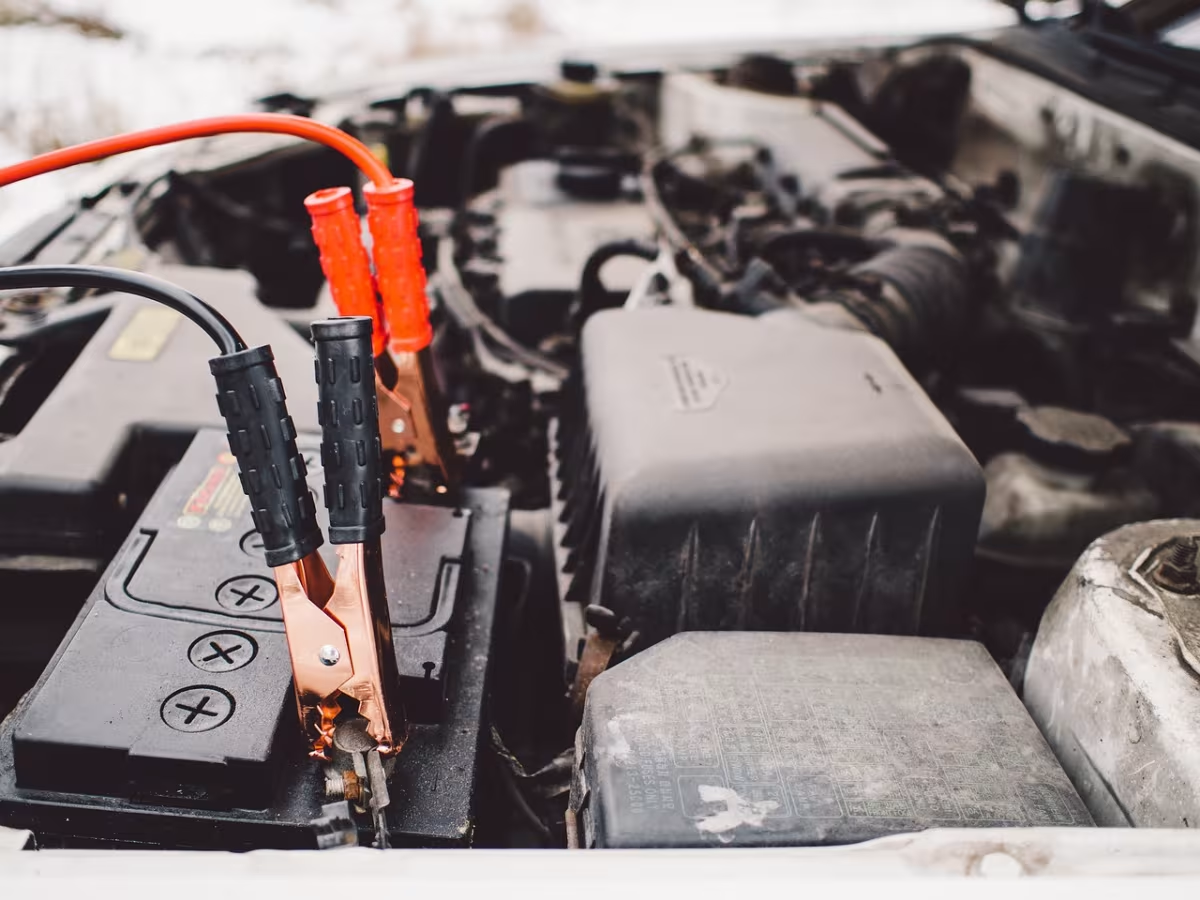
Jump started but the car died again — what it means
A jump start that works and then fails is not a failed jump start. It is a diagnosis. How long the car ran before it stopped tells you almost exactly what is wrong.
How long did it run?
A jump start does one thing: it supplies enough current to turn the engine over. Once the engine is running, keeping it running is the alternator’s job. So when a car starts on a boost and then stops, the timing points at the cause.
- Died within seconds of disconnecting the leads — the alternator is almost certainly not charging at all. The engine was running on borrowed power and stopped as soon as it was taken away.
- Ran for a few minutes, then died while driving — the same fault. The battery held things together until it was exhausted, which takes minutes rather than hours once the headlights and heater are on.
- Got you home, then would not start the next morning — the alternator may well be fine. This points at a battery no longer holding charge, or something draining it while parked.
- Fine for several days, then flat again — typically a parasitic drain, or a battery near the end of its life.
The alternator has stopped charging
If your car died within moments of the jump leads coming off, this is the answer the overwhelming majority of the time.
A car needs continuous electrical power to run. Ignition, fuel pump, engine management and injectors all draw current the whole time the engine is turning. With a healthy alternator producing roughly 13.7 to 14.7 volts, everything runs and the battery is topped up at the same time. With no alternator output, all of that comes from a battery that has just been drained flat and given a few minutes of charge. It does not last.
Supporting signs
- The battery warning light stayed on while the engine was running
- The lights dimmed progressively before it cut out
- The power steering went heavy or the dash lit up with unrelated warnings just before it stopped
- A whining noise from the engine bay while it was running
That dashboard battery symbol is widely misread. It does not mean “your battery is low”. It means the charging system is not delivering what it should — which usually means the alternator, its drive belt, or the wiring between them.
Sometimes it is only the belt
The alternator is driven by a belt. If that belt has snapped, slipped or lost tension, a perfectly good alternator stops producing anything. On most cars the same belt also drives the water pump, so a snapped belt can mean the engine overheats within minutes. If your temperature gauge climbed before the car stopped, mention it — that changes what should happen next, and continuing to drive could be expensive.
The battery no longer holds charge
If the car ran fine after the boost and then would not start the following morning, the charging system is probably working. The battery is taking charge and losing it.
Car batteries typically last somewhere between three and five years, less if the car does mostly short journeys. They fail gradually, then suddenly. Two things accelerate it:
- Being run completely flat. A deep discharge does permanent damage. A battery that has been flattened two or three times — lights left on, a door ajar overnight — often never recovers its original capacity.
- Short journeys. Starting the engine takes a large amount of charge, and a ten-minute drive may not replace it. Do that daily and the battery drifts steadily downwards until one cold morning it cannot start the car at all.
A long drive after a jump start is often suggested as a way to recharge the battery. It helps, but it is frequently overstated: an alternator charges a deeply flat battery slowly, and half an hour on the A55 will not fully restore one. A proper mains charger overnight does a far better job.
Something is draining it while parked
If a new battery keeps going flat and the alternator checks out, something is drawing current while the car sits. Every modern car has a small standing draw for the alarm, clock and modules, and that is normal. A fault makes it much larger.
Common culprits:
- A boot, glovebox or interior light staying on because a switch has failed
- A hard-wired dashcam left in parking mode
- An aftermarket alarm, tracker or stereo wired to a permanent live
- A relay that sticks closed and keeps a circuit energised
- A module that fails to go to sleep after the car is locked
Parasitic drains are diagnosed by measuring current with everything shut down and then pulling fuses one at a time to find the circuit responsible. It is methodical workshop work rather than a roadside job.
Why a second jump start rarely helps
If the first boost did not hold, a second one will behave the same way. The jump start was never the thing that failed — it did its job and the engine ran.
There is a practical risk in repeated attempts, too. Driving on a car that is not charging means it will cut out eventually, and you do not get to choose where. Losing the engine at speed means losing power steering and power assistance to the brakes. On a fast road, or on one of the mountain passes where there is nowhere to pull in, that is a situation worth avoiding deliberately.
If you know the car is not charging, the safer plan is to stop somewhere sensible and arrange recovery rather than to try to get a few more miles out of it.
What we check when we come out
On a callout of this kind, the sequence is straightforward. We measure the battery’s resting voltage to see what state it is in. We start the engine and measure again — that immediately shows whether the alternator is producing anything. We load the system with the lights and heater to see whether it holds up under demand. And we check the drive belt and the battery terminals, because a loose connection can imitate both faults convincingly.
That tells us whether you need a boost and a battery, or a recovery and an alternator. You get a straight answer at the roadside either way, including when the answer is that a jump start will not help you.
Mobile jump starts across North Wales, 24/7
We cover all of North Wales and aim to reach you within 30 to 60 minutes. We confirm the exact price before we set off, based on your location and vehicle. If your car has died twice, say so when you call — it changes what we bring with us.
Not sure whether it is the battery at all? Our guide to telling the battery, alternator and starter apart walks through the symptoms, or see the jump start service page.
Call 07768 491888More guides and tools
Questions, answered
Why did my car die again after a jump start?
Because a jump start only gets the engine turning; keeping it running is the alternator's job. If the car stopped within seconds or minutes of the leads coming off, the alternator is almost certainly not charging. If it ran fine and then would not start the next day, the battery is more likely at fault.
Can I keep driving if the battery light is on?
It is not advisable. That light means the charging system is not delivering properly, so the car is running on battery reserve and will stop, usually within minutes once lights and heater are on. Losing the engine at speed also means losing power steering and brake assistance. Stop somewhere safe and arrange recovery.
How long will a car run with a failed alternator?
There is no reliable figure. It depends on how much charge the battery had and how much is being used. With headlights, wipers and heater running on a wet night it can be only a few minutes. It is not something to plan a journey around.
Will a long drive recharge a flat battery?
Partly. An alternator recharges a deeply discharged battery slowly, and a short run will not restore it fully. An overnight charge from a proper mains charger does a much better job. If the battery has been flattened completely more than once, it may not recover at all.
How long should a car battery last?
Typically three to five years, and less if the car mainly does short journeys or has been run completely flat. Being deeply discharged causes permanent damage, so a battery that has been flattened repeatedly often fails early.
What is a parasitic drain?
It is current being drawn while the car is parked and locked. A small draw is normal for the alarm and modules. A fault makes it much larger, and common causes include a boot light staying on, a hard-wired dashcam in parking mode, an aftermarket alarm or stereo, or a module that never goes to sleep.
Is it the battery or the alternator if my car keeps dying?
Dying while driving points at the alternator. Failing to start after standing overnight points at the battery. Measuring voltage settles it: roughly 12.6 V with the engine off is a healthy battery, and 13.7 V to 14.7 V with the engine running means the alternator is charging.