Electric car broken down? What can and cannot be done at the roadside
An electric car has two batteries, and almost every misunderstanding about EV breakdowns comes from not knowing which one has failed. One can often be boosted at the roadside. The other cannot.
Two batteries, two completely different problems
The traction battery is the large high-voltage pack that drives the car. If that is flat, there is nothing to jump start — the car needs charging or recovering. No amount of jump leads will help, and nobody should be attempting anything at the roadside near a high-voltage system.
The 12 volt battery is an ordinary car battery, and most EVs have one. It runs the computers, the locks, the lights and the systems that wake the car up. When it fails, the car often will not power up at all — and it looks exactly like a dead EV, even with plenty of charge in the traction battery.
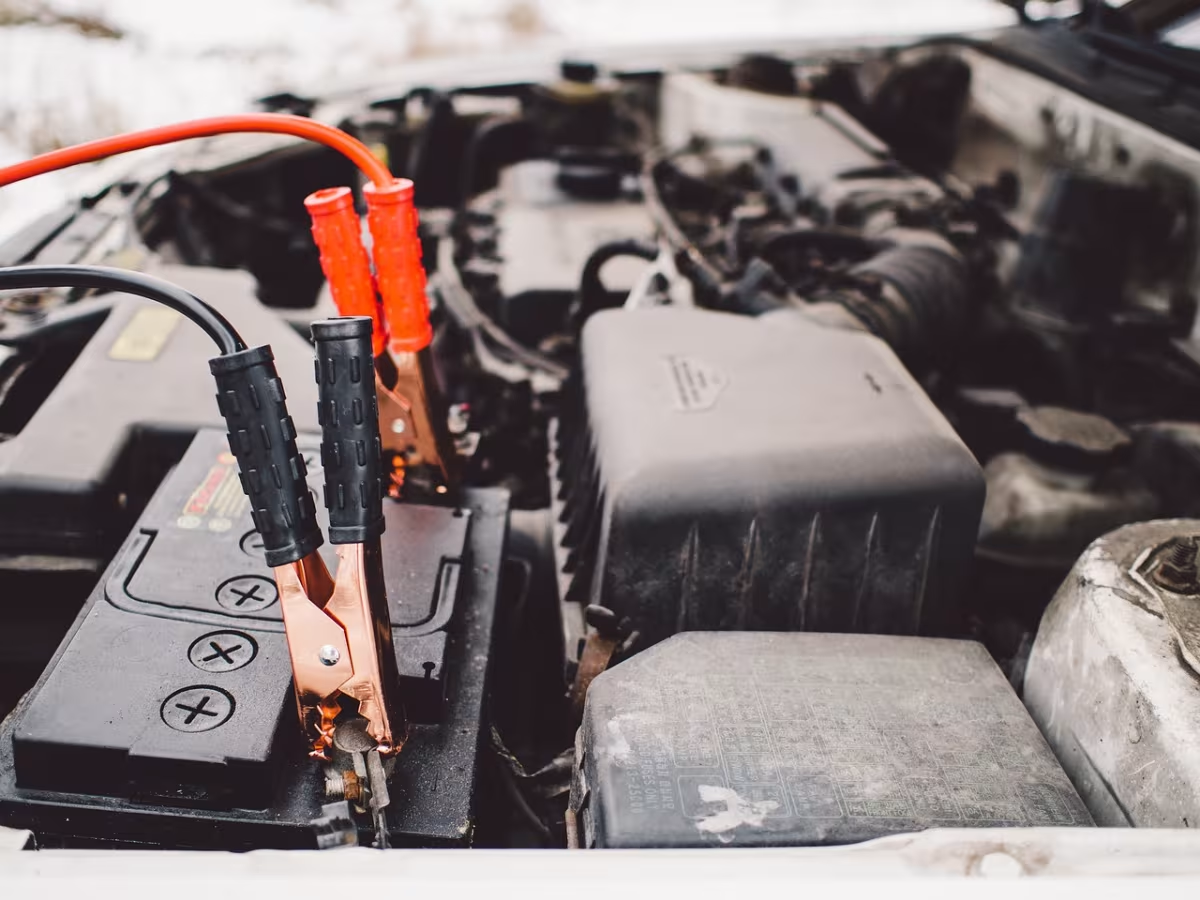
This is the part that surprises people. A 12 volt failure can usually be boosted in the normal way, and the car then powers up and drives on the charge it already had. Owners frequently assume they need a recovery truck when what they actually need is a jump start.
Telling the two apart
- Nothing at all — no lights, no dash, no response to the key. That points at the 12 volt battery. A traction battery at zero still normally leaves the interior electronics alive.
- The car powers up and shows a range or charge reading of zero. That is the traction battery, and it needs charging or recovery.
- Warning messages about the 12 volt system in the days before — a very common precursor. EVs often warn about this and drivers understandably assume it is trivial.
- It happened after the car sat unused for weeks. Usually the 12 volt battery. They self-discharge like any other, and an EV left plugged out for a month can flatten one.
Two rules worth knowing before anyone opens the bonnet
- Do not use another EV to jump start anything. Manufacturers generally prohibit it. The 12 volt system in an EV is not designed to deliver that kind of current and you risk damaging the donor car’s electronics.
- Equally, do not use an EV to jump start a petrol or diesel car. Same reason, and it is a common mistake at car parks.
- Never attempt anything involving the orange cabling. Orange means high voltage. That is not roadside work under any circumstances.
- Follow the handbook for the 12 volt terminals. On many EVs they are not where you expect, and some models have designated jump points rather than direct access to the battery.
Why an EV usually needs a flatbed
If the car does need moving, how it is moved matters more than with a conventional vehicle.
Most EVs must be recovered with all four wheels off the ground — flatbed, or a suspended tow with dollies. The reason is regenerative braking: when the driven wheels turn, the motor generates electricity. Towing an EV with those wheels on the road can feed current into a system that is not expecting it and damage the drivetrain or power electronics.
There is a practical consequence too. Ignoring the manufacturer’s towing instructions can invalidate a warranty or an insurance claim, so “a quick tow round the corner” on a rope is a genuinely expensive shortcut. Never use a rope or chain on an EV.
If you have run out of charge, that is a recovery job to a charge point rather than a roadside fix. Some providers offer mobile charging, but it typically adds only a modest range — enough to reach a charger, not to continue a journey.
EV tyres wear faster, and that catches owners out
Electric cars are heavier than the equivalent petrol model because of the battery pack, and they deliver maximum torque instantly. Both work the tyres harder, and owners coming from a petrol car are often surprised how quickly tread disappears.
- Check tread more often than you used to. The 20p test takes a minute.
- Load index matters more. The extra weight means an EV frequently specifies a higher load rating — check with our tyre size decoder and never fit lower than specified.
- Some EVs use specific tyres designed for low rolling resistance and noise. Fitting a standard equivalent can noticeably reduce range and increase cabin noise.
- Many EVs have no spare wheel at all, only a sealant kit, which will not help with a sidewall split or a blowout.
Tell us what it is doing and we will tell you honestly
If your EV is dead because of the 12 volt battery, our mobile jump start service can very often get you moving. If the traction battery is flat or the car needs specialist recovery, we will say so on the phone rather than turning up and charging you to find out.
Tell us the make, model and exactly what the car is doing when you call — particularly whether anything lights up at all.
Call 07768 491888More guides and tools
Questions, answered
Can you jump start an electric car?
You can jump start the 12 volt battery, which most EVs have and which runs the computers, locks and lights. When that fails the car often will not power up at all and looks completely dead. What cannot be jump started is the high-voltage traction battery that drives the car, which needs charging or recovery.
How do I know if it's the 12 volt battery or the traction battery?
If nothing happens at all, no lights and no response, it is usually the 12 volt battery. If the car powers up normally but shows zero range or charge, it is the traction battery. A car that has sat unused for weeks has most likely flattened its 12 volt battery.
Can I use an electric car to jump start another car?
No. Manufacturers generally prohibit using an EV as a donor vehicle, whether for another EV or a petrol or diesel car. The 12 volt system is not designed to deliver that kind of current and you risk damaging the donor car's electronics.
Can an electric car be towed?
Not conventionally. Most EVs must be recovered with all four wheels off the ground, on a flatbed or with dollies, because regenerative braking means turning the driven wheels generates electricity and can damage the drivetrain. Never use a rope or chain, and be aware that ignoring the manufacturer's towing rules can invalidate a warranty or insurance claim.
What happens if my electric car runs out of charge?
It needs recovering to a charge point rather than fixing at the roadside. Some providers offer mobile charging, but this usually adds only a modest amount of range, enough to reach a charger rather than to continue your journey.
Do electric cars wear tyres faster?
Generally yes. EVs are heavier because of the battery pack and deliver maximum torque instantly, and both work the tyres harder. Check tread more often than you would on a petrol car, and never fit a lower load index than specified, since the extra weight often means a higher rating is required.
Is it safe to work on an electric car at the roadside?
Only the 12 volt system, and only following the handbook. Never touch anything connected to the orange high-voltage cabling under any circumstances. On many EVs the 12 volt terminals are not where you would expect and some models have designated jump points instead.