Winter driving in North Wales: what actually catches people out
It is rarely deep snow that strands drivers here. It is a battery that was already weak, a tyre that was already marginal, and a coast road that funnels wind straight at your car.
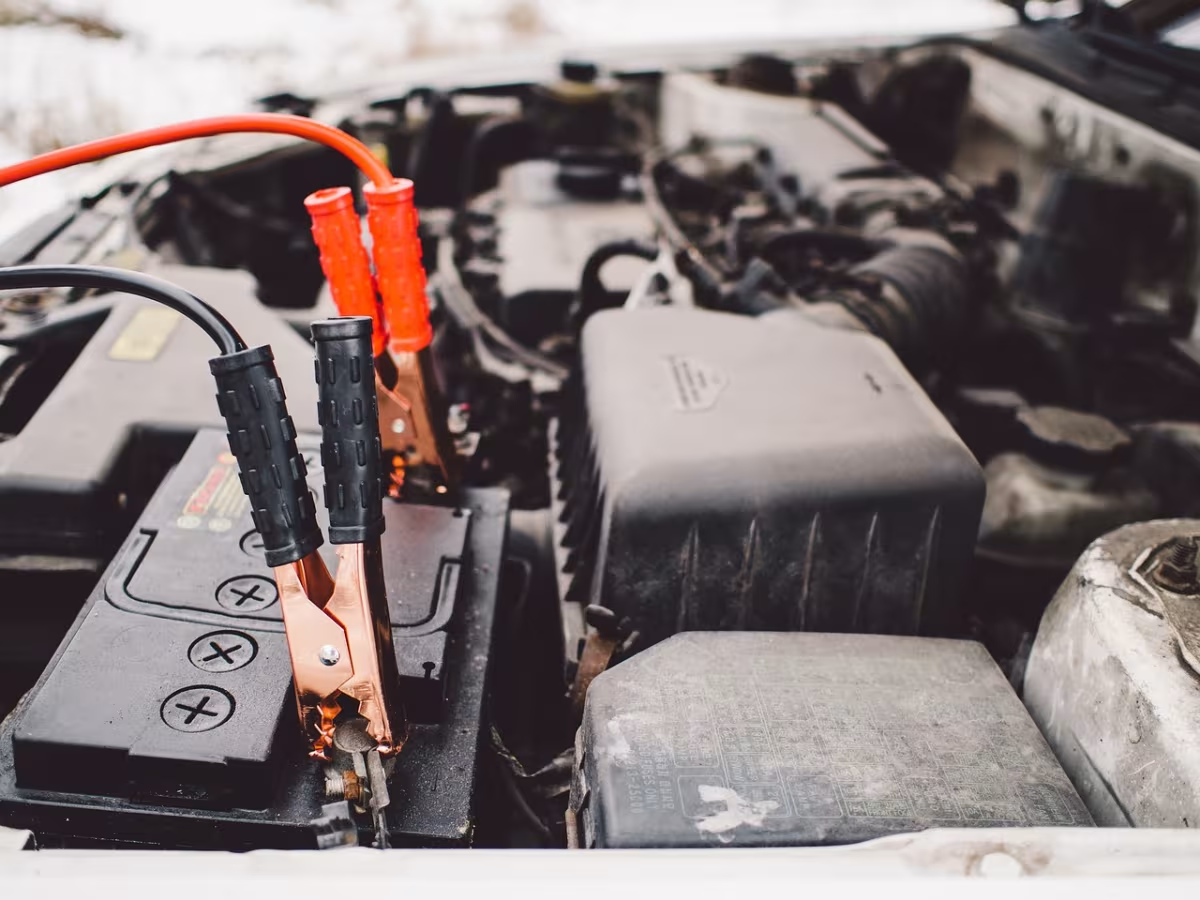
Cold does not kill batteries. It exposes them.
Cold works against you twice over. It slows the chemical reaction inside the battery so it can deliver less current, and it thickens the engine oil so the starter needs more. A battery that has been quietly failing since summer meets both problems on the same morning.
That is why jump start callouts spike after the first hard frost rather than in the depths of winter. The battery did not fail because it got cold; it failed because it was already weak and the cold found it.
The warning signs are usually there for weeks. Cranking that sounds slower than it used to, particularly first thing. Headlights that dim noticeably as you start. A battery over five years old.
- Score yours with the battery health check.
- Around 12.6 V with the engine off after standing is healthy. 13.7 V to 14.7 V running means the alternator is charging.
- Short winter journeys make it worse — starting takes a lot of charge and a ten-minute drive with the heater and lights on may not replace it.
Wet matters more than snow round here
North Wales gets far more wet road than frozen road, and wet grip falls off a cliff as tread wears. Testing by MIRA found wet braking distance can be up to 44 per cent longer on a tyre worn to the 1.6 mm legal limit compared with one at 3 mm.
Through a wet winter that difference is measured in car lengths on every emergency stop. It is the single strongest argument for replacing at 3 mm rather than running to the legal minimum.
- Check pressures cold, monthly. Tyres lose pressure as temperatures drop, and under-inflation ruins wet grip and wears the shoulders.
- Do the 20p test across all four tyres and in several places around each.
- Look for the three-peak snowflake symbol if you are buying winter tyres. The M+S marking is self-declared and means much less.
- Salt accelerates corrosion. Rinse the underside occasionally through winter, especially on the coast where you get salt from both the gritter and the sea.
Wind, water and the coast road
A few things about driving here in winter are specific to this stretch of coast and the ground behind it.
- Crosswinds on exposed sections. The coastal stretches and the crossings to Anglesey catch wind hard. High-sided vehicles, caravans and roof boxes feel it most, and restrictions can apply in severe weather.
- Standing water after heavy rain. Water collects in the same places every year. If you cannot see how deep it is, do not drive into it.
- Ice forms first in the shade. Tree-lined lanes and the north side of hills stay frozen long after open road has thawed, and bridges freeze before the roads either side.
- The passes hold snow when the coast is clear. Conditions inland can be nothing like the conditions where you started — see the mountain passes guide.
- It gets dark early. More of your driving happens at night, which puts more load on the battery through lights, wipers and heated screens.
Check Traffic Wales before a long journey in bad weather, or report a hazard on 0300 123 1213.
Worth carrying between November and March
- A warm coat and a blanket — kept in the cabin, not the boot, so you are not opening the tailgate on a live road
- A torch, and a phone power bank
- Ice scraper and de-icer, plus screenwash rated for low temperatures
- Something high-visibility for each person
- Water and something to eat if you are heading inland
- Stout footwear, if you might have to walk for signal
Two habits are worth as much as the kit. Keep the tank above a quarter through winter, because a queue behind a closure burns fuel while going nowhere. And clear the whole windscreen and all the windows before moving — not a letterbox-sized patch.
We come to you, 24/7
We cover mobile jump starts and mobile tyre fitting across the whole of North Wales through the winter, and we aim to reach you within 30 to 60 minutes. If a jump start is not going to fix it, we will tell you at the roadside rather than after.
Call 07768 491888More guides and tools
Questions, answered
Why does my car only fail to start when it's cold?
Cold slows the chemical reaction inside the battery so it delivers less current, and it thickens engine oil so the starter needs more. A battery that has been weakening since summer meets both problems at once. The cold does not cause the failure, it exposes a battery that was already marginal.
Do I need winter tyres in North Wales?
For most drivers on the coast, no. Wet grip matters more than snow here, so good tread on quality all-season or summer tyres is the priority. If you regularly drive inland or over the passes in winter, look for the three-peak mountain and snowflake symbol, which is tested for snow performance, rather than the self-declared M+S marking.
What tread depth should I have in winter?
The legal minimum is 1.6 mm, but 3 mm is the sensible replacement point. MIRA testing found wet braking distance can be up to 44 per cent longer at 1.6 mm than at 3 mm, and through a wet North Wales winter that difference shows up on every emergency stop.
How often should I check tyre pressures in winter?
Monthly, and always cold before you set off. Tyres lose pressure as temperatures fall, and under-inflation reduces wet grip, increases wear on the shoulders and costs you fuel.
What should I keep in the car in winter?
A warm coat and blanket in the cabin rather than the boot, a torch, a phone power bank, ice scraper and de-icer, low-temperature screenwash, something high-visibility for each person, and water and food if you are heading inland. Keep the fuel tank above a quarter.
Does road salt damage my car?
It accelerates corrosion, particularly underneath. On the North Wales coast you get salt from the gritters and from the sea air, so rinsing the underside occasionally through winter is worth the effort, especially on older vehicles.